Goal
Torchbound started as (and it still is, as I write this) an implementation of Five Torches Deep. I still believe that it was the right choice: implementing a real game gave me concrete rules, contracts, tests, persistence requirements, dungeon interactions, combat, progression, and UI behavior instead of designing an abstract RPG engine upfront.
As Torchbound grows, however, I am wondering if it could be possible to preserve an important architectural option (which is a new idea, it just crossed my mind, so I'm letting my uncontrollable ramblings flow here):
Torchbound Core should not assume that Five Torches Deep is the definition of an RPG.
The long-term goal is not to turn Torchbound into a universal RPG framework. It would rather be to make the ruleset an explicit boundary, so that another system could eventually replace 5TD without requiring Torchbound itself to be rewritten.
Possible future rulesets include Nimble and an adapted 2D6 Dungeon ruleset.
Torchbound today
The current architecture already contains a large amount of reusable infrastructure:
- campaign and session management
- SQLite persistence
- commands and events
- dungeon import from Delveforge
- dungeon identity, provenance and spatial state
- save/reload
- navigation and UI
- player-facing projections
- world-state management
However, the Engine also directly knows about many concepts belong specifically to 5TD.
Examples include checks, combat rules, proficiency, Supply, death and stabilization, resting, progression, spells, treasure rules and other game-specific mechanics.
Conceptually, the architecture still looks roughly like this:
                         TORCHBOUND TODAY

                         ╭─────────────╮
                         │     UI      │
                         ╰──────┬──────╯
                                │
                                ▼
                    ╭──────────────────────╮
                    │  Campaign / Session  │
                    ╰──────────┬───────────╯
                               │
                               ▼
                    ╭──────────────────────╮
                    │        ENGINE        │
                    ╰──────────┬───────────╯
                               │
                ┌──────────────┼──────────────┐
                │              │              │
                ▼              ▼              ▼
          ╭───────────╮  ╭───────────╮  ╭─────────────╮
          │  Dungeon  │  │   State   │  │ Persistence │
          ╰───────────╯  ╰───────────╯  ╰─────────────╯
                               │
                               ▼
               ╭──────────────────────────────╮
               │       5TD assumptions        │
               │                              │
               │  checks       combat         │
               │  Supply       death          │
               │  rest         progression    │
               │  spells       treasure       │
               ╰──────────────┬───────────────╯
                              │
                              ▼
                   ╭────────────────────╮
                   │ Five Torches Deep  │
                   ╰────────────────────╯
This does not mean Torchbound would have to be rewritten from scratch to use another system.
It does mean that changing rulesets today would still require invasive surgery because infrastructure, orchestration and rules responsibilities are not yet consistently separated.
The architectural constraint from now on
The new rule is deliberately simpler than "build a multi-ruleset engine":
New Torchbound Core code must not introduce an implicit dependency on a Five Torches Deep rule.
For every new feature, from now I want to distinguish four responsibilities:
Core: Torchbound infrastructure and orchestration.
Rules: Mechanics belonging to the selected game system.
Content: Authored Torchbound adventures, encounters, profiles and configuration that may intentionally use a particular ruleset.
External contracts: Delveforge and other external representations that describe things to Torchbound without defining its game rules.
Existing mixed code does not need to be rewritten immediately. I will first audit it and then separate responsibilities where there is a demonstrated architectural benefit.
Target architecture
The desired direction is approximately:
                          TORCHBOUND

                    ╭────────────────────╮
                    │         UI         │
                    ╰─────────┬──────────╯
                              │
                              ▼
             ╭────────────────────────────────╮
             │        Campaign / Core         │
             │                                │
             │   state          identity      │
             │   commands       events        │
             │   persistence    projections   │
             │   dungeon        orchestration │
             ╰───────────────┬────────────────╯
                             │
                             ▼
                 ╭──────────────────────╮
                 │ Explicit Rules API   │
                 ╰──────────┬───────────╯
                            │
               ┌────────────┼────────────┐
               │            │            │
               ▼            ▼            ▼
        ╭────────────╮ ╭────────────╮ ╭────────────╮
        │    5TD     │ │   Nimble   │ │   2D6D*    │
        │ Rules Pack │ │ Rules Pack │ │ Rules Pack │
        ╰────────────╯ ╰────────────╯ ╰────────────╯

                 Interchangeable Rules Packs

            * adapted to use DF-provided dungeons
The Core should therefore know primarily about concepts such as:
- identities
- state
- commands
- events
- spaces and positions
- persistence
- transitions
- sessions
- projections
It should avoid assuming that every RPG necessarily has:
- STR / DEX / CON / INT / WIS / CHA
- d20 checks and DCs
- AC
- Supply
- spell slots
- 5TD death mechanics
- 5TD progression
- 5TD treasure tables
Those concepts can exist in Torchbound — but their owner is the Rules Pack, not necessarily Torchbound Core.
Delveforge remains a separate responsibility
This distinction is particularly important for dungeon generation.
Torchbound should not become a procedural dungeon generator merely because one supported ruleset normally includes dungeon generation.
The intended responsibility split is:
                       ╭────────────────╮
                       │   DELVEFORGE   │
                       ╰───────┬────────╯
                               │
                      describes / generates
                               │
                               ▼
                       ╭────────────────╮
                       │    DUNGEON     │
                       ╰───────┬────────╯
                               │
                               ▼
                 ╭──────────────────────────╮
                 │     TORCHBOUND CORE      │
                 │                          │
                 │  identity                │
                 │  spatial state           │
                 │  persistence             │
                 │  world state             │
                 │  orchestration           │
                 ╰────────────┬─────────────╯
                              │
                     interprets / resolves
                              │
                              ▼
                       ╭──────────────╮
                       │  RULES PACK  │
                       ╰──────────────╯
In other words:
Delveforge says what the dungeon is.
Torchbound says what exists and what happens in it.
The Rules Pack says how actions and consequences are resolved.
This remains true even for an adapted 2D6 Dungeon Rules Pack.
2D6 Dungeon normally includes procedural dungeon generation as part of its gameplay loop. In Torchbound, I would deliberately remove that responsibility from the Rules Pack and replace it with Delveforge.
Torchbound itself should not gain procedural dungeon generation merely to reproduce that part of 2D6 Dungeon.
Three architectural tests
I can use three rulesets as conceptual tests without implementing any of them yet.
Five Torches Deep - baseline
5TD is the existing implementation.
The question is:
Can I identify and eventually remove the 5TD rules without removing Torchbound infrastructure with them?
This reveals the current Core/Rules coupling.
Nimble - substitution test
Nimble is another fantasy RPG, so it will share some concepts with 5TD while implementing them differently.
The question becomes:
Could I replace 5TD with Nimble without changing code that genuinely belongs to Torchbound Core?
This is important because otherwise I could accidentally create abstractions that are merely the common denominator of 5TD and Nimble and mistake them for generic Torchbound concepts.
2D6 Dungeon - partial-ruleset / DF-substitution test
2D6 Dungeon is structurally more different.
For Torchbound, I would deliberately remove its procedural dungeon-generation responsibility and replace it with Delveforge.
The question becomes:
Can a Rules Pack surrender a responsibility already owned by another Torchbound component while retaining its coherent resolution, combat, treasure and progression mechanics?
This prevents me from solving the opposite problem by making Torchbound Core absurdly broad.
What I am deliberately NOT doing
I am not building a generic RPG framework today and trying to predict every RPG mechanic I may encounter in the future.
Instead, I can use the existing 5TD implementation to discover the first real boundary.
Later, an actual Nimble implementation can challenge that boundary.
If Nimble exposes incorrect assumptions, I can adjust it.
A substantially different system such as adapted 2D6 Dungeon can challenge it again.
The abstraction therefore emerges from real implementations and failing assumptions, rather than speculative generalization.
Desired end state
Eventually, changing the game system should conceptually approach:
                    ╭────────────────────╮
                    │  Torchbound Core   │
                    ╰─────────┬──────────╯
                              │
              ┌───────────────┼────────────────┐
              │               │                │
              ▼               ▼                ▼
       ╭─────────────╮ ╭───────────────╮ ╭──────────────╮
       │ Delveforge  │ │ Campaign / UI │ │  Rules Pack  │
       │   Dungeon   │ │ Saves / State │ ╰──────┬───────╯
       ╰─────────────╯ ╰───────────────╯        │
                                                ▼
                                     ╭────────────────────╮
                                     │ Five Torches Deep  │
                                     ╰────────────────────╯
                                                │
                                           swap rules
                                                │
                                                ▼
                                         ╭────────────╮
                                         │   Nimble   │
                                         ╰────────────╯
rather than:
                     ╭────────────────╮
                     │ Change ruleset │
                     ╰───────┬────────╯
                             │
                             ▼
                     rewrite engine.lua
                             │
                             ▼
                 rewrite campaign_session
                             │
                             ▼
                    rewrite dungeon logic
                             │
                             ▼
                    rewrite persistence
                             │
                             ▼
                        rewrite UI
                             │
                             ▼
                    rewrite everything
                             │
                             ▼
                            :(
That being said, I am far from being close to that yet.
But Torchbound is still early enough that adopting this constraint now is cheap compared with extracting 5TD assumptions after several more major gameplay systems have been built.
The immediate strategy is therefore:
Audit the existing coupling. Do not over-engineer it. Stop introducing new coupling today. Extract Rules boundaries only where real dependencies demonstrate that they are needed.
That keeps Five Torches Deep as Torchbound's first fully supported ruleset while leaving the door open for Torchbound to become, later, a game capable of running the same underlying campaign/dungeon infrastructure through genuinely different Rules Packs.
Yes, I know why you smile.
As if... this challenge wasn't already out of proportion to my technical abilities and my long-term commitment :)
Peace. Out.
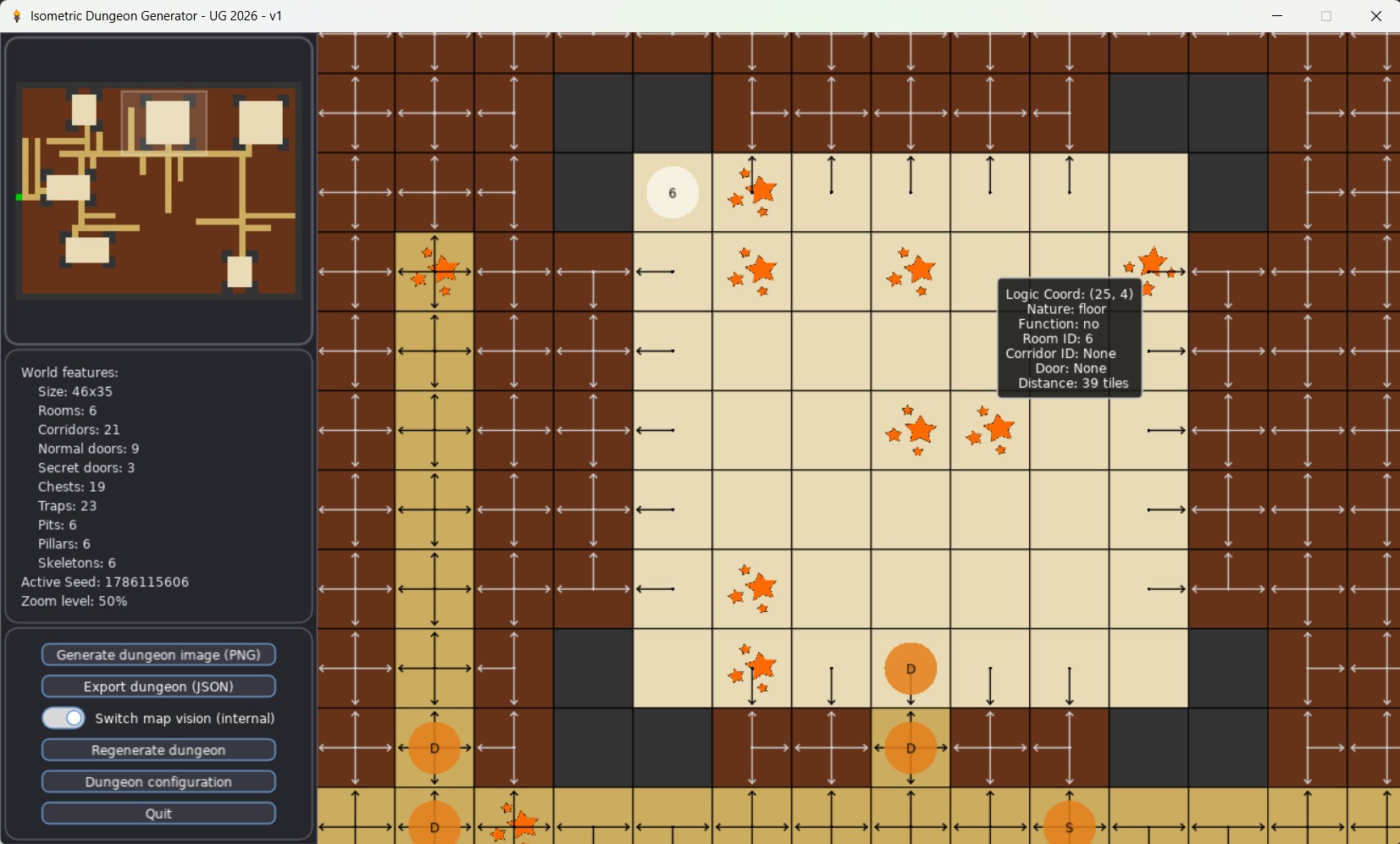
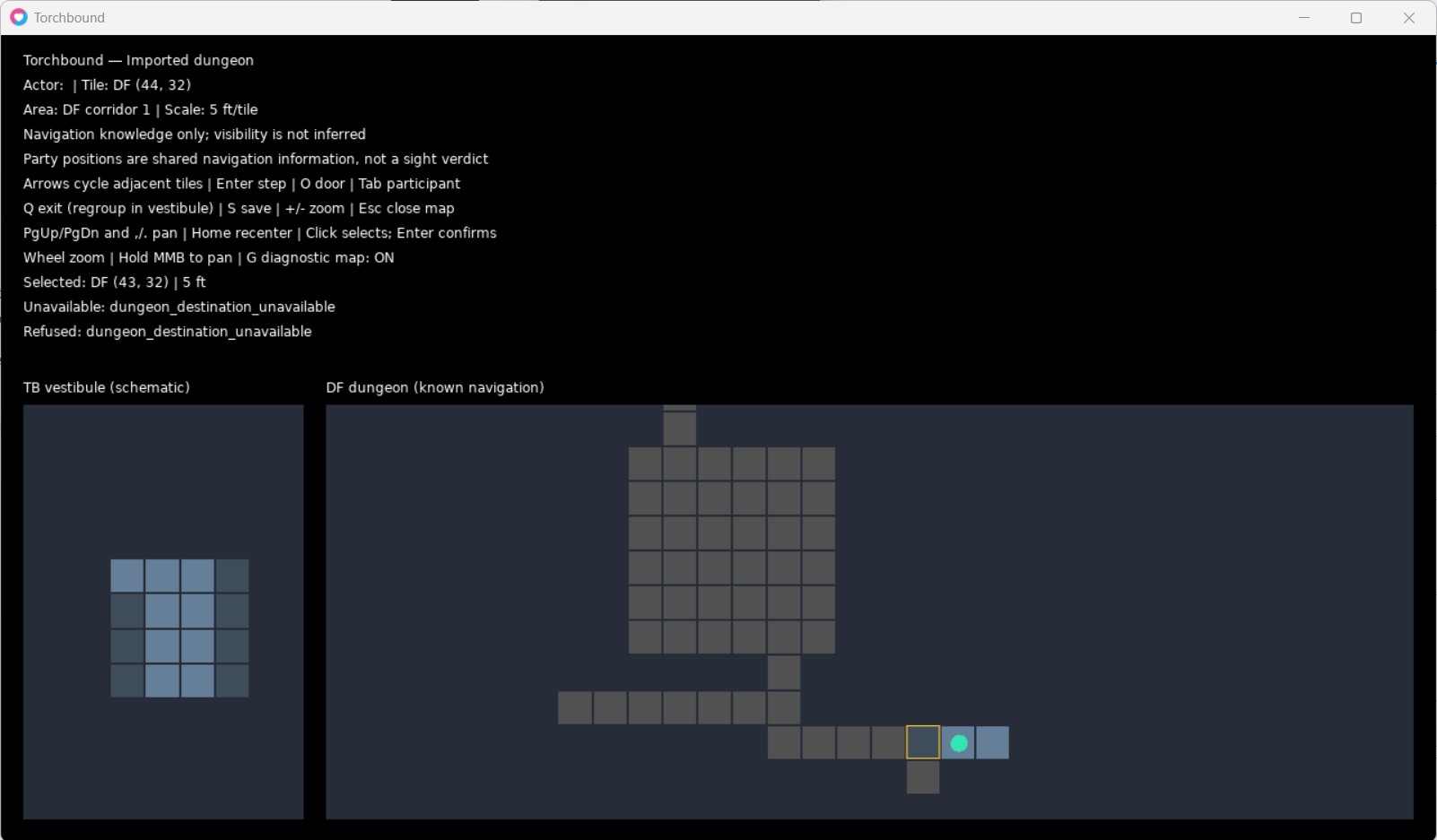 This is a god mode view, the dark squares are unknown to the player.

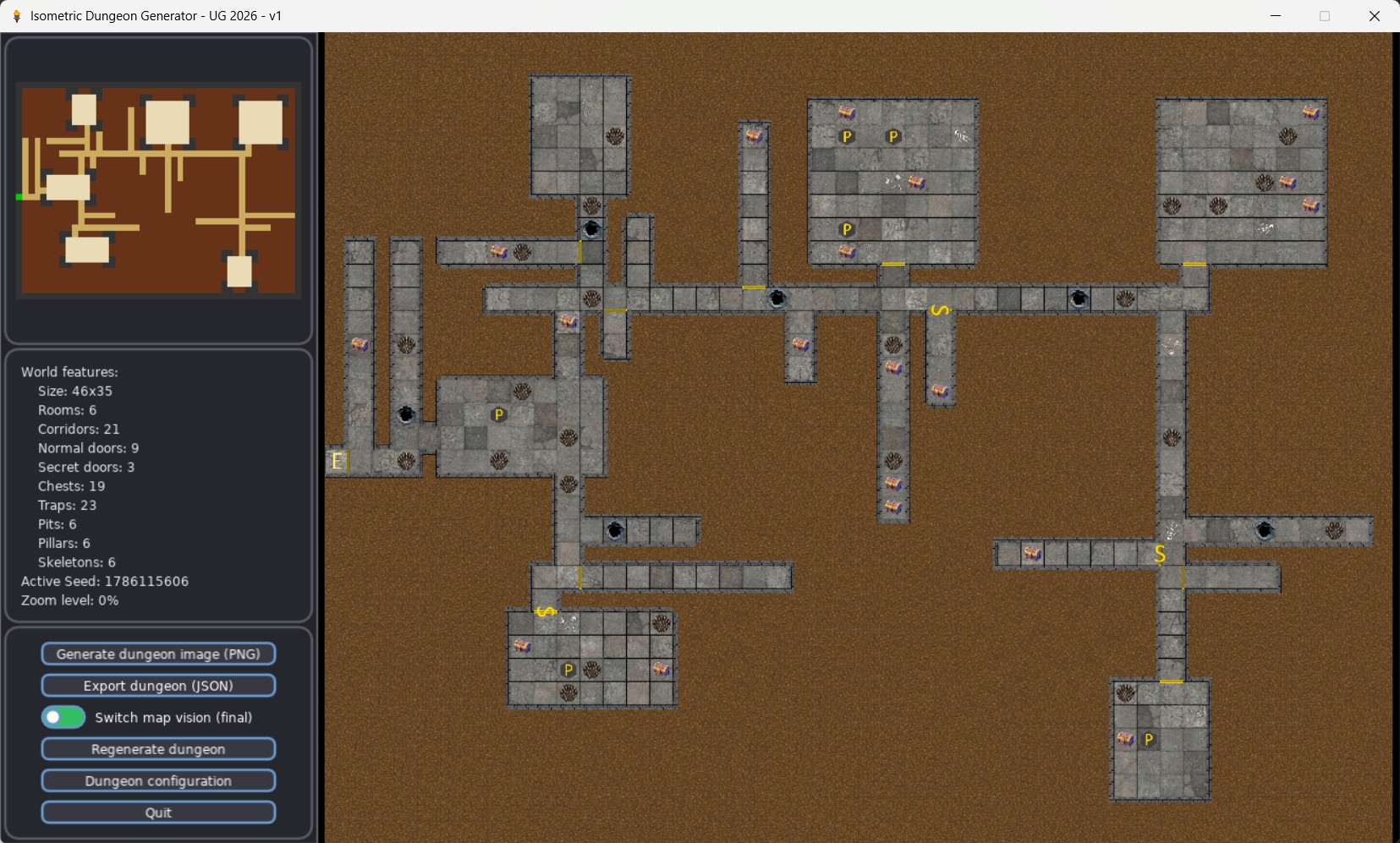 A zoomable “internal” view of the dungeon that lets you visualize the underlying logic behind object generation:
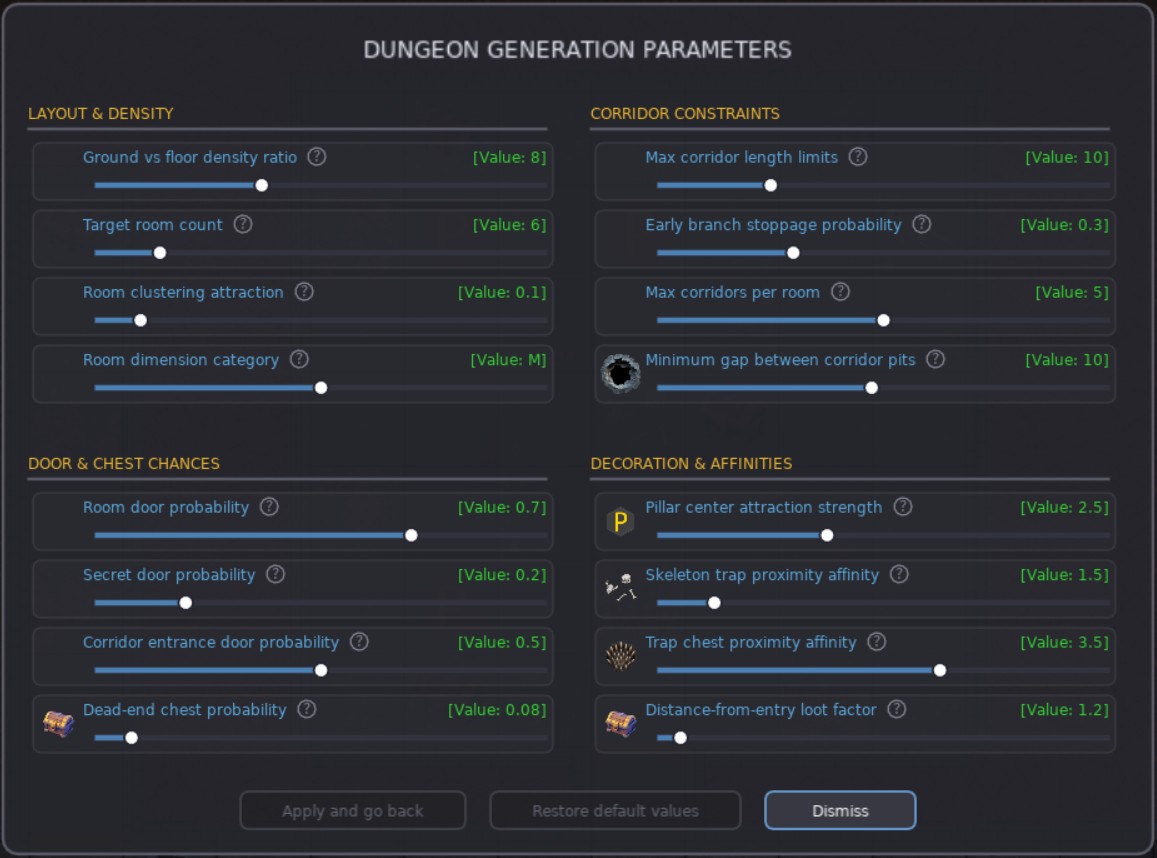
  A configuration window to control (to some extent) the parameters of the generated dungeon: